
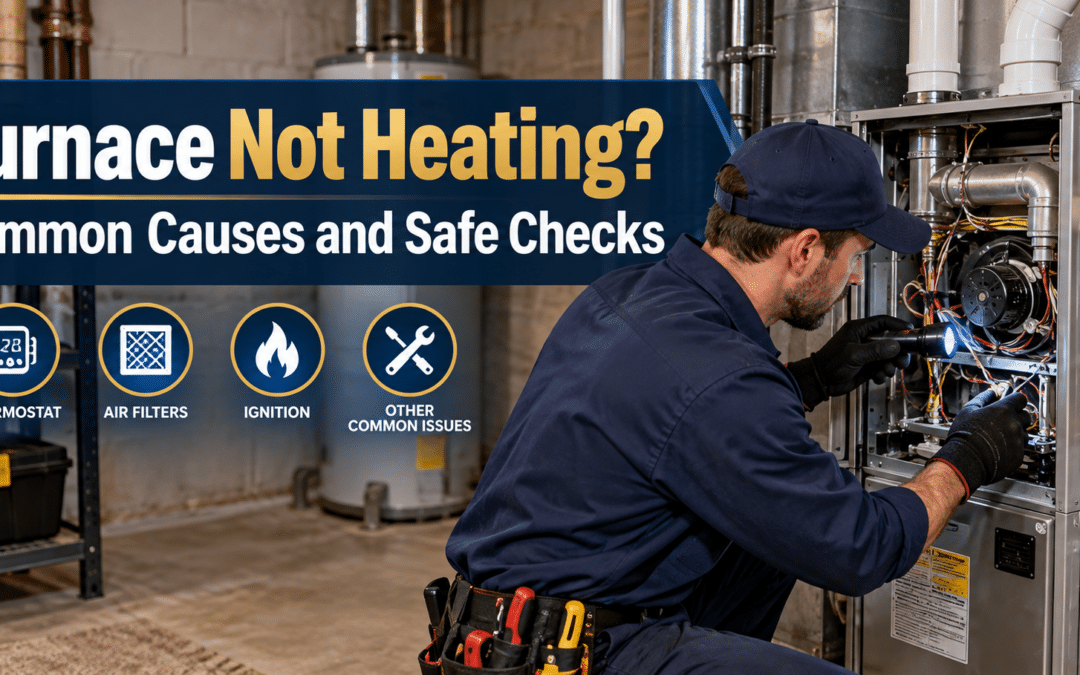
A furnace that fails to heat your home can turn a chilly Indiana night into an uncomfortable one. Some problems relate to settings or filters; others involve ignition, airflow, or safety controls that should only be handled by a qualified technician. Here’s how to narrow down the problem without taking unnecessary risks.
First, check the thermostat
Make sure it is set to Heat and the desired temperature is above the current indoor temperature. If the screen is blank and your thermostat uses batteries, replace them. Check whether a scheduled setback is active. If the thermostat looks normal but the furnace does not respond, stop short of opening equipment panels.
Check the furnace filter and vents
A dirty filter may reduce airflow and contribute to overheating and protective shutdowns. Replace filters according to the equipment instructions. Also check that returns are not blocked and that supply vents have clear paths into rooms. Don’t use a filter rating the blower system cannot accommodate.
Note what the furnace is doing
Does the fan run but blow cool air? Does the unit start and stop quickly? Is there an unusual sound? These observations can help a technician distinguish among thermostat, airflow, ignition, control, and other possible faults. Avoid repeated attempts to reset safety switches or restarting a unit that appears unsafe.
Ignition and combustion issues need professional service
Gas furnaces include safety controls and combustion-related components. Ignition failures, gas-valve problems, venting restrictions, and damaged heat exchangers are not safe DIY projects. Never bypass a safety switch, disassemble gas equipment, or attempt to adjust gas pressure.
Know the warning signs
A burning electrical odor, repeated breaker trips, unusual banging, or persistent cycling merits attention. If you smell gas or a carbon monoxide alarm activates, leave the building immediately, follow emergency instructions, and contact the appropriate emergency or utility service from a safe location. Do not keep operating suspected unsafe equipment.
Why regular heating maintenance helps
Preseason checks can help identify developing issues with electrical connections, controls, airflow, and combustion-related parts. ENERGY STAR recommends professional checks ahead of the heating season, while homeowners can inspect accessible filters routinely. A tune-up cannot guarantee a breakdown-free winter, but it can support safer, more consistent operation.
When should you schedule furnace repair?
If basic thermostat and filter checks do not restore heat, arrange a diagnosis. Write down the system model, recent symptoms, and whether the issue affects all rooms. Ask your technician what failed, what the repair includes, and whether additional maintenance is needed.
Heating services in Evansville
Evansville Heating and Air Conditioning provides residential heating installation, repair, and maintenance. Read about our residential heating and cooling services and HVAC maintenance, or contact us at (812) 618-2659.
Start by describing what “not heating” means
The furnace never turning on is different from a system that starts but sends cool air, shuts down early, or heats the home unevenly. If the thermostat is blank, note that fact. If you hear a fan but no heat, mention it. If the house warms normally in the morning and then struggles on a very cold evening, that pattern is also worth documenting. Precise descriptions can help a technician narrow the investigation without guesswork.
Remember that a furnace may run the fan for a short period before or after a heating cycle. That behavior is not always a failure. The concern is persistent cold airflow, failure to reach the thermostat setting, or equipment behavior that has changed unexpectedly. Don’t try to bypass a safety switch or repeatedly restart a furnace that keeps shutting itself off.
Safe checks versus repairs that need a professional
Homeowners can usually check the thermostat mode, replace thermostat batteries, inspect a user-accessible air filter, and make sure supply and return vents are unobstructed. If the furnace uses a clearly labeled external service switch, check its position without opening equipment panels. Read the owner’s manual first, since control layouts vary. A breaker that repeatedly trips is a reason to stop, not a signal to keep resetting it.
Gas connections, combustion components, wiring, and safety controls belong to trained professionals. Do not remove a furnace cover to bypass an interlock or attempt to relight unfamiliar equipment. If you smell gas, leave the building and contact the gas utility or emergency service from a safe location. If a carbon monoxide alarm sounds, get everyone to fresh air and follow emergency instructions rather than trying to find the source yourself.
How airflow can affect heating comfort
Even when a furnace generates heat, restricted airflow can interfere with performance. A dirty filter, closed register, obstructed return grille, or duct problem can reduce the amount of conditioned air reaching rooms. Check only accessible items that the manufacturer expects homeowners to maintain. Installing a very dense filter without verifying system compatibility can make airflow worse rather than better.
If one room is colder than the rest, pay attention to door positions, vent placement, and whether the issue is new. A cold bedroom does not necessarily mean the furnace’s burner is failing. Insulation, air leakage, duct design, and thermostat location can all influence the result. That is why the location and timing of the problem matter during a service call.
What a technician may inspect
A professional diagnostic visit may include thermostat and control testing, airflow evaluation, electrical checks, and inspection of heating components. For combustion equipment, qualified technicians can assess relevant safety and venting concerns using appropriate procedures. The exact scope depends on the system and the symptoms, so ask the technician to explain the findings and recommended action.
When a part needs replacement, ask whether the failure is isolated or connected to another problem. You should also understand any safety recommendation and when the equipment can be operated again. If the furnace must remain off until repaired, use only safe, manufacturer-approved temporary heating arrangements and never use an oven or outdoor combustion appliance to heat the home.
How to reduce next winter’s surprises
Keep a record of maintenance and repair dates, check filters on a reasonable schedule, and book a heating inspection before heavy seasonal use if your equipment needs one. Test smoke and carbon monoxide alarms as recommended by their manufacturers. These steps cannot prevent every breakdown, but they create a more informed starting point when something goes wrong.
Frequently asked questions
Q? Why does my furnace blow cold air?
A. Possible reasons include thermostat fan settings, normal startup behavior, airflow restrictions, or a furnace fault. Persistent cool air should be professionally diagnosed.
Q? Can a dirty filter shut down a furnace?
A. Restricted airflow can cause overheating and safety shutdowns in some systems. Use the correct filter and contact a professional if the problem continues.
Q? Should I repair my gas furnace myself?
A. Leave gas, electrical, ignition, and combustion-related repairs to qualified professionals.
Evansville Heating And Air Conditioning
https://maps.app.goo.gl/D7tMzVR6FDK5okjM9
5625 Pearl Dr. Suite F Box 200 Evansville, IN 47712
(812) 618-2659
https://evansvilleheatingandair.com/