
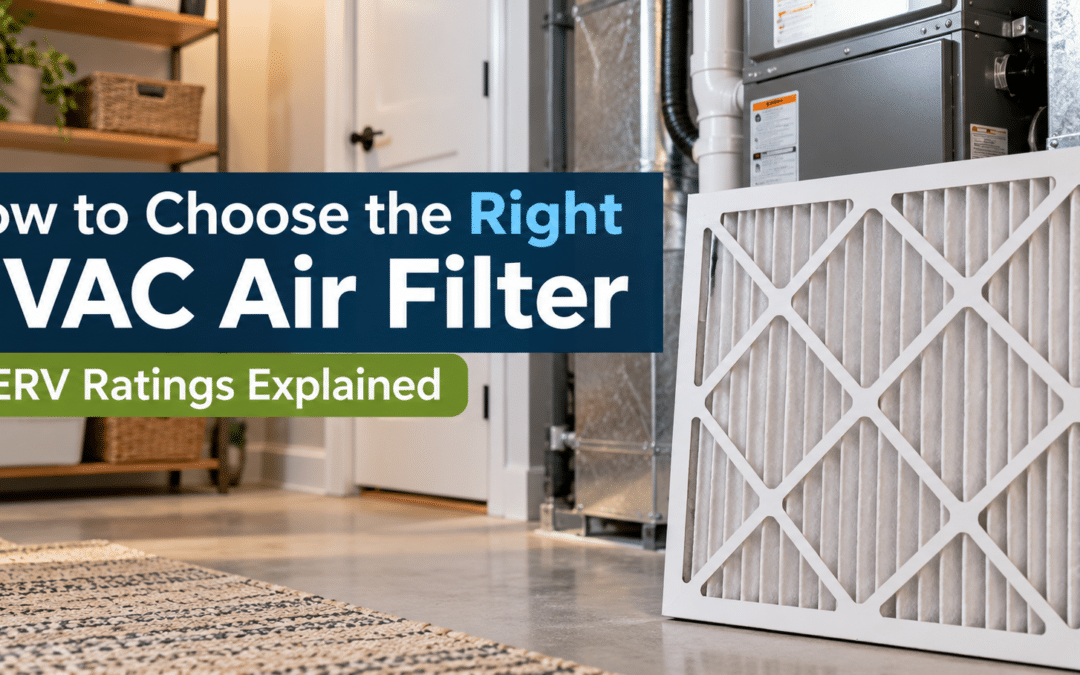
A replacement HVAC filter may look like a simple purchase, but the wrong size or resistance can affect airflow. A filter also cannot solve every indoor air quality problem. Understanding MERV ratings and your system’s requirements helps you choose a sensible option for your home.
What does MERV mean?
MERV stands for Minimum Efficiency Reporting Value. It is a standardized rating that describes a filter’s ability to capture particles across tested sizes. In general, higher MERV ratings capture more particles, including some smaller particles, but filter performance and the pressure drop across the filter must be considered together.
Is the highest MERV rating always best?
Not necessarily. A dense filter that exceeds what your system can comfortably handle may restrict airflow. EPA recommends MERV 13, or the highest rating the system fan and filter slot can accommodate. Some systems may need a different filter type or setup. A qualified technician can help determine compatibility if you are unsure.
Getting the correct filter size
Check the size printed on the installed filter and compare it with the equipment manufacturer’s requirements. The new filter should fit the slot securely without crushing, bending, or leaving large gaps. Pay attention to the airflow arrow on the frame and install it in the indicated direction.
How often should an HVAC filter be changed?
Replacement timing varies. Filter thickness, pets, dust levels, indoor activities, household occupancy, and HVAC runtime all matter. Inspect filters frequently, especially during heating and cooling seasons. Many common filters are replaced on a roughly 60–90 day cycle, but a visibly dirty filter may need attention sooner, and the manufacturer may specify a different schedule.
What an HVAC filter can and cannot do
Central HVAC filters can reduce particles in the air that passes through the system. However, filtration alone does not eliminate all indoor pollutants. EPA emphasizes three complementary strategies: control pollution sources, ventilate appropriately, and use filtration where useful. Portable room air cleaners may also help, especially where a central system does not run continuously.
Can a clogged filter affect heating and cooling?
Yes. A dirty filter can restrict airflow, contributing to reduced comfort and making equipment work harder. It can also complicate diagnosis when an AC is not cooling or a heating system is cycling unexpectedly. If problems persist after installing the correct clean filter, arrange a professional assessment rather than assuming the filter is the only issue.
A quick filter-selection checklist
- Match the correct physical dimensions and filter design.
- Check the equipment manufacturer’s recommended filter type.
- Choose an efficiency rating compatible with the fan and filter slot.
- Follow the airflow arrow during installation.
- Inspect regularly and record replacement dates.
- Ask an HVAC technician before making a major jump in filter resistance.
Get help with HVAC airflow and maintenance
Evansville Heating and Air Conditioning provides residential heating and cooling services and HVAC maintenance. If a filter-related issue seems to be affecting system operation, contact our team or call (812) 618-2659.
What MERV actually measures
MERV stands for Minimum Efficiency Reporting Value. It is a laboratory-based way to describe how well a filter captures particles in different size ranges. Higher ratings generally indicate better capture of smaller particles, but the number is not a direct score for overall indoor air quality. A filter cannot remove every pollutant, and filtration works only when air passes through it. Source control and appropriate ventilation remain important parts of a healthier indoor environment.
Different retailers may also display proprietary scales, such as MPR or FPR. They do not map perfectly to MERV in every situation. When comparing products, start with a clear MERV rating if available and then check the size, thickness, and equipment requirements. Avoid assuming the product with the biggest number is automatically the right purchase for your furnace or air handler.
Why system compatibility matters more than a headline rating
A filter must let the HVAC blower move enough air through the system. Some high-efficiency filters create more resistance than the equipment can comfortably handle, particularly if the filter is too small, poorly fitted, or left dirty. Filter thickness and surface area also matter. A deeper media filter may behave differently from a thin filter with a similar MERV rating, so the rating alone does not tell the whole story.
EPA recommends MERV 13 or the highest efficiency the system can accommodate. The important second half of that advice is compatibility. If your current filter is much lower rated and you want to upgrade, check your equipment manual or ask a technician rather than forcing a new filter into the slot. Good filtration should not come at the expense of appropriate airflow.
Choosing a size that fits correctly
Read the size printed on the existing filter and confirm it matches the equipment requirements. Some filters list nominal sizes that differ slightly from actual measured dimensions. The replacement should fit the intended rack or slot without being crushed, bent, or leaving obvious gaps where unfiltered air can pass. If your filter housing is unusual, ask for the correct specification rather than trimming material or improvising a seal.
Make a note of airflow direction before removing the old filter, and follow the arrows on the replacement. If you are unsure which way the system moves air, consult the manual. Installing a filter backward or using the wrong size may reduce its usefulness.
How often should you check a filter?
The right inspection interval depends on the filter type, household activity, pets, dust, and system run time. A home undergoing remodeling may load a filter more quickly than a lightly occupied home. Do not rely only on a fixed number of days printed on the box. Check the filter visually according to manufacturer guidance and replace it when indicated. Keep spare filters labeled with the correct size so the next change is simple.
If dust or allergy symptoms are persistent, remember that an HVAC filter is only part of the picture. Investigate moisture sources, cleaning practices, ventilation, and other pollutant sources. An air filter cannot correct every indoor air quality concern, and medical questions about symptoms belong with an appropriate healthcare professional.
Questions to ask before upgrading filtration
Ask your HVAC technician which filter ratings and dimensions are suitable for your equipment. Is the return-air system sized for the proposed filter? Is there a better filter cabinet option if higher-efficiency filtration is important to the household? How should the filter be inspected and replaced? A useful recommendation will balance particle removal with safe, reliable system airflow.
Frequently asked questions
Q? Is MERV 13 safe for every furnace?
A. No. It depends on the system’s airflow requirements and available filter area. Verify compatibility before changing filter types.
Q? Can an HVAC filter remove every indoor pollutant?
A. No. Most filters primarily address particles. Ventilation and source control remain important.
Q? Should I change the filter only when the thermostat alerts me?
A. Use alerts as reminders, but inspect the filter and follow equipment instructions as well.
Evansville Heating And Air Conditioning
https://maps.app.goo.gl/D7tMzVR6FDK5okjM9
5625 Pearl Dr. Suite F Box 200 Evansville, IN 47712
(812) 618-2659
https://evansvilleheatingandair.com/