
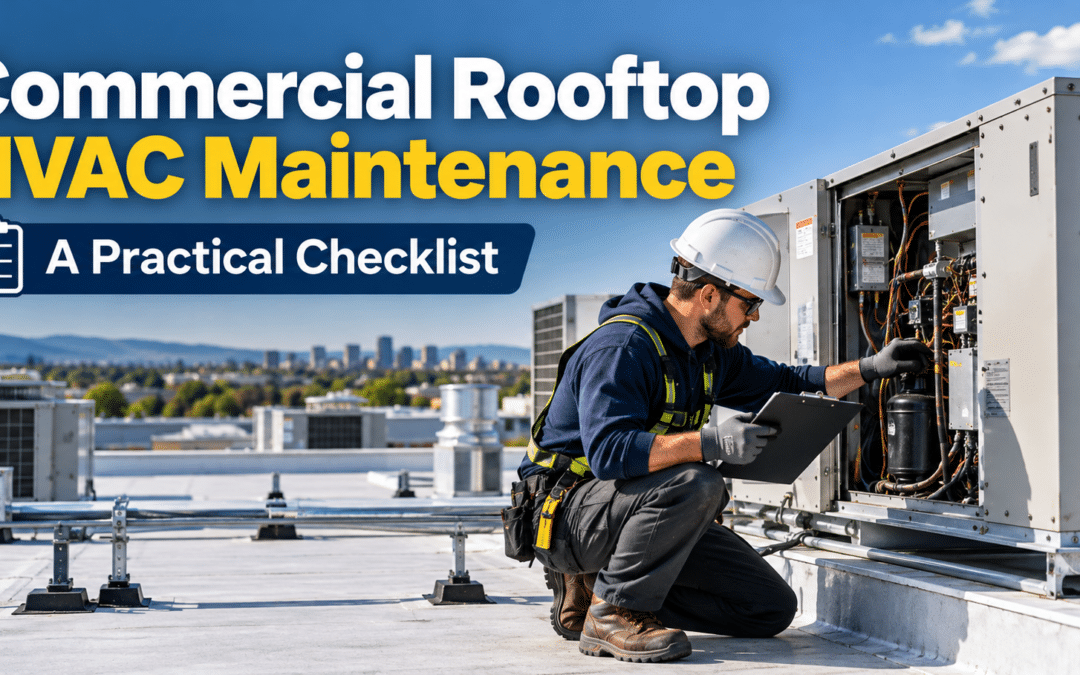
Commercial rooftop HVAC units (RTUs) can quietly handle heating and cooling for offices, shops, and other light commercial buildings—until comfort complaints or an unexpected shutdown disrupt operations. A straightforward maintenance plan helps building managers spot concerns, document performance, and schedule qualified service before peak demand.
Start with a building-specific equipment inventory
Record each unit’s location, manufacturer, model and serial number, filter dimensions, thermostat or control zone, and service history. If a building has multiple RTUs, label them consistently. Good records help a technician identify equipment quickly and track recurring problems.
Inspect filters and airflow conditions
Filters need inspection and replacement based on conditions and manufacturer guidance. An overloaded filter can restrict airflow and reduce performance. Check that occupied-space return grilles and supply outlets are not obstructed. A qualified technician should handle rooftop-unit access, filter-housing issues, and any work that requires opening equipment compartments.
Look for drainage and water problems
During cooling operation, condensate drainage can be a source of leaks and moisture concerns. Report water stains, damp ceiling tiles, persistent odors, or signs of drainage problems promptly. Water-related issues deserve attention before they damage interiors or contribute to indoor air quality concerns.
Schedule qualified inspections of electrical and mechanical parts
ENERGY STAR’s maintenance guidance includes checking electrical connections, controls, moving parts where applicable, coils, refrigerant-related performance, and drainage. Commercial RTUs also have manufacturer-specific components and operating requirements. Building staff should not attempt internal electrical, gas, or refrigerant work.
Pay attention to heating and ventilation functions
Some RTUs include gas heat or outdoor-air ventilation controls. Maintenance should account for the particular equipment, local requirements, and building occupancy. Persistent stuffiness, uneven temperatures, or heating shutdowns can indicate issues beyond the thermostat setting. A trained professional should assess gas-combustion and ventilation-related faults.
Keep the roof and service access safe
A maintenance program should include secure roof access, appropriate fall protection, clearances around equipment, and coordination with the building’s operating schedule. Report loose exterior panels or obvious damage from a safe location. Roof work should be assigned to properly trained personnel.
Track complaints and abnormal operating patterns
Record what occupants report, when the issue occurs, which zone is affected, and whether a unit cycles repeatedly or runs continuously. Compare these notes with service findings. A clear history helps prioritize repairs and makes decisions about replacement more informed.
Build a repeatable maintenance log
For each service visit, record the date, unit identifier, performed tasks, measured conditions when supplied by the contractor, findings, recommended follow-up, and next scheduled check. The right service frequency depends on equipment type, manufacturer directions, operating hours, and conditions.
Commercial HVAC service in Evansville
Evansville Heating and Air Conditioning provides light commercial services, including rooftop unit repair, replacement, air handlers, and maintenance. Visit our commercial HVAC services page, see our HVAC maintenance services, or contact us at (812) 618-2659.
Put the checklist into an operating routine
Commercial rooftop equipment is easier to maintain when the work is scheduled and recorded. Start with an accurate equipment list: location, model and serial numbers, approximate age, serving area, and service history. A small property may have only a few packaged rooftop units, while a larger site has different zones and operating schedules. Either way, a written inventory prevents a unit from being overlooked because nobody remembers which roof section it serves.
Assign responsibility for documenting complaints and scheduling qualified maintenance. Staff members who notice uncomfortable rooms, unusual noises, or water stains can report them without accessing the roof. A brief log of dates, affected areas, and symptoms gives the contractor useful context. It also helps distinguish a recurring problem from an isolated complaint.
The safety boundary for rooftop equipment
Roof access introduces fall hazards, weather exposure, and electrical risks. Managers should not ask untrained employees to open cabinets, remove panels, reach near moving fans, or investigate energized equipment. Refrigerant work and electrical diagnosis require appropriately trained personnel. If roof access is controlled, arrange safe entry procedures with the contractor before the visit.
A maintenance checklist is not permission for staff to perform technical inspections. Building personnel can document indoor symptoms, check thermostat schedules through approved controls, and confirm that roof access is available. The HVAC contractor can assess internal components, electrical connections, coils, filters, drainage, and equipment performance using suitable procedures.
Why filters, airflow, and ventilation matter
Dirty or poorly fitted filters can restrict airflow, but filter needs vary with the building’s occupancy and equipment design. A restaurant, retail space, and lightly occupied office may load filters differently. Ventilation requirements also depend on how the building is used. Ask the contractor to confirm the correct filter specification and inspect the unit’s airflow rather than simply installing whatever filter happens to be on hand.
When occupants complain about one hot area, examine when the complaint occurs. Is the zone busy only at midday? Does the thermostat schedule change on weekends? Have furniture layouts, partitions, or occupancy changed? These details may point toward control, balancing, or load issues in addition to the rooftop unit itself.
Drainage, weather, and building protection
Rooftop systems deal with rain, debris, and seasonal temperature changes. Drainage problems may lead to water damage or nuisance shutdowns. Loose debris can affect airflow around equipment. A professional can inspect condensate paths, cabinet integrity, mounting conditions, and signs of weather-related deterioration. Building managers can help by reporting ceiling stains, recurring leaks, and changes after storms.
Documentation matters after severe weather. Photos of visible exterior damage taken from a safe location, maintenance records, and prompt contractor communication can help with later repair decisions. Never climb onto an unsafe roof just to capture a picture.
A useful post-service report
After maintenance, ask for a summary of what was inspected, any measurements or deficiencies, repairs recommended, and the priority of each finding. Separate urgent safety issues from routine improvements and future capital planning. Budgeting becomes easier when the property manager can see which unit has recurring issues and which one has a relatively clean history.
If equipment replacement is being considered, discuss capacity, business hours, occupancy changes, installation logistics, and downtime. A replacement should address the building’s current use, not merely duplicate an old unit’s label. Good maintenance records support those conversations and reduce surprises.
Frequently asked questions
Q? How often should a commercial rooftop unit be serviced?
A. Follow the manufacturer’s schedule and a qualified contractor’s recommendations based on operating conditions and building use.
Q? Can building staff repair an RTU?
A. Routine observation and reporting may be appropriate; internal electrical, refrigerant, gas, and rooftop repair tasks should go to qualified personnel.
Q? What should a building manager log?
A. Record dates, unit identifiers, symptoms, service findings, corrective work, and the next planned check.
Evansville Heating And Air Conditioning
https://maps.app.goo.gl/D7tMzVR6FDK5okjM9
5625 Pearl Dr. Suite F Box 200 Evansville, IN 47712
(812) 618-2659
https://evansvilleheatingandair.com/