
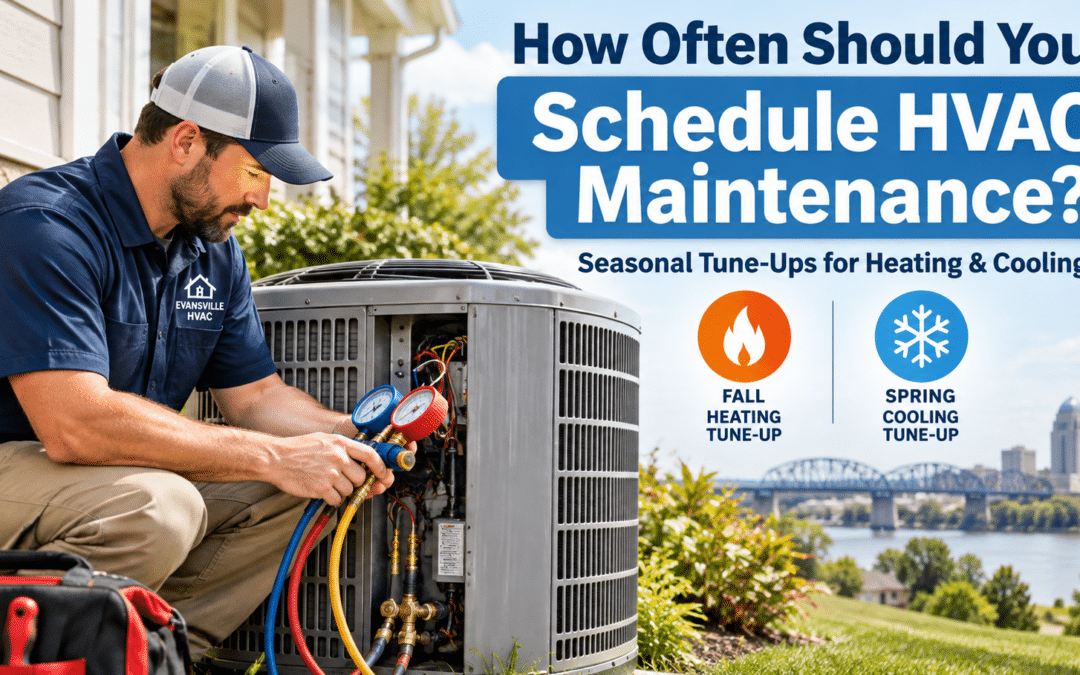
Homeowners often wait to schedule HVAC service until something stops working. But a simple maintenance routine can help you spot developing problems, support equipment performance, and avoid getting caught off guard when temperatures change in Evansville. The right schedule depends on the equipment you own, how you use it, and the manufacturer’s guidance.
A practical starting point: seasonal professional checks
ENERGY STAR recommends professional heating and cooling check-ups before peak use: cooling equipment in the spring and heating equipment in the fall. That is a practical baseline for many homes. If you have a single heat pump that provides both heating and cooling, ask your contractor what visit schedule makes sense for your model and workload.
Spring: prepare your air conditioner
Before the first long stretch of hot weather, a technician can evaluate system operation, electrical connections, airflow, condensate drainage, and cooling components as appropriate. The visit is also a good time to mention rooms that did not cool evenly last summer, a thermostat that behaves unpredictably, or changes in system noise.
Fall: prepare your heating system
A preseason heating check focuses on the type of equipment installed. For gas furnaces, trained professionals should inspect relevant combustion and safety-related components. For electric or heat-pump systems, the applicable checks differ. The goal is to assess safe operation and identify concerns before the heating season.
Filter checks happen more often
Professional visits do not replace basic homeowner care. Inspect the filter regularly, especially during heavy use or in homes with pets or a lot of dust. ENERGY STAR recommends monthly inspection. Replace or clean filters as instructed by the manufacturer and when visibly dirty. A higher-efficiency filter is not automatically suitable for every blower; choose a rating the equipment can support.
Signs you should not wait for a scheduled visit
Arrange service sooner if the AC stops cooling, the furnace fails to heat, the system short-cycles, water appears where it shouldn’t, or unfamiliar sounds persist. Electrical burning smells, gas odors, and carbon monoxide alarms require an appropriate immediate safety response rather than routine scheduling.
Does maintenance guarantee lower bills?
No. Maintenance can support effective airflow and equipment performance, but energy costs also depend on insulation, weather, thermostat settings, equipment age, and household behavior. Consider maintenance as part of reliable system care, not a promise of a fixed savings percentage.
What should you ask during a tune-up?
Ask which checks apply to your system, whether the technician found safety or performance issues, and what follow-up work is recommended. Keep a record of the visit, the filter type used, and any measurements or parts replaced. This makes it easier to compare system condition over time.
HVAC maintenance help in Evansville
Evansville Heating and Air Conditioning offers maintenance services for heating and cooling equipment. See our HVAC maintenance services, explore residential HVAC service, or contact us at (812) 618-2659.
Build a maintenance schedule around your equipment
A maintenance schedule should reflect the system in your home rather than a single calendar rule. A house with a central air conditioner and gas furnace may have different service needs from a home with a heat pump or several ductless units. Look first at the equipment manufacturer’s instructions and any warranty conditions. Then discuss seasonal service with an HVAC professional who can account for system age, operating history, and local conditions.
For many homes, it is practical to think about cooling equipment before the hottest part of the year and heating equipment before winter. That does not mean every appointment must happen on an exact date. It means allowing time for inspection or repairs before you rely on the system every day. In Evansville, planning ahead can also make the process less stressful when temperatures shift quickly.
What homeowners can reasonably do between visits
Check your filter regularly and replace it when needed according to the manufacturer’s guidance. Keep supply registers and return-air grilles unobstructed. Look around outdoor equipment for accumulated leaves or grass clippings, and keep vegetation from crowding the unit. Use the thermostat in a consistent way, and note unusual operating changes rather than ignoring them.
Some equipment manuals describe homeowner-accessible drain or filter tasks. Follow those instructions carefully and stop if access requires electrical panels, unfamiliar tools, or contact with moving parts. Routine homeowner checks are not a substitute for professional inspection of electrical, refrigerant, or combustion components.
Why a tune-up is not the same as a repair
Maintenance aims to inspect, clean, and evaluate equipment before a specific failure is known. A repair addresses a diagnosed fault. During a maintenance visit, a technician might discover a component that needs additional work. That repair may require separate authorization, parts, or cost. Ask what the tune-up includes and what happens if a problem is found.
It is also reasonable to ask for a plain-language summary when the appointment ends. What was inspected? Were any measurements outside expected ranges? Was cleaning performed? Is there anything to monitor? A clear service record helps you keep track of equipment condition over time.
Signs you should not wait for the next scheduled visit
If your AC stops cooling, the furnace repeatedly shuts off, unusual odors develop, or a safety alarm activates, do not wait for a routine tune-up. Burning smells, repeated breaker trips, or water near electrical components call for prompt attention. Gas odors and carbon monoxide alarm conditions require emergency response from a safe location. No maintenance calendar should override an immediate safety concern.
Less urgent changes matter too. Rising noise, weak airflow, new vibration, inconsistent temperatures, or unusually frequent cycling may justify scheduling an inspection. The value of noticing these problems early is that you can describe them while they are still occurring.
Make the most of the service visit
Before the appointment, list comfort complaints room by room and collect any past invoices or model information you can find. Mention recent filter changes, renovations, thermostat changes, or new additions to the home. After service, keep the report in one place and note the next recommended check. A simple folder of records can make later repair-versus-replacement decisions more informed.
Frequently asked questions
Q? Is one HVAC service visit per year enough?
A. It depends on the equipment. Separate cooling and heating systems commonly benefit from their own preseason checks; always follow your equipment instructions.
Q? How often should I check my air filter?
A. Check it monthly during heavy-use periods or as your equipment instructions recommend, and replace it when dirty.
Q? Is a tune-up the same as a repair?
A. No. A tune-up evaluates and maintains equipment; a repair addresses a diagnosed fault.
Evansville Heating And Air Conditioning
https://maps.app.goo.gl/D7tMzVR6FDK5okjM9
5625 Pearl Dr. Suite F Box 200 Evansville, IN 47712
(812) 618-2659
https://evansvilleheatingandair.com/